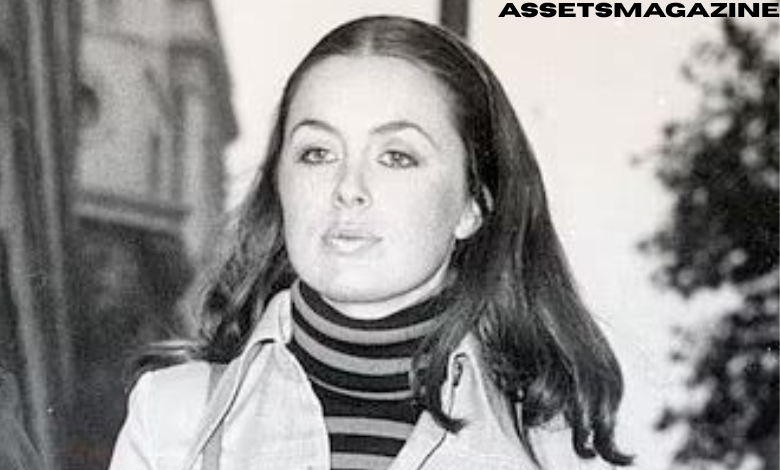
Sheila Buckley is most often discussed in connection with one of the most unusual political incidents in modern British history. She was not a public official or a media figure, and there is little evidence she sought attention or public recognition. Her name became widely known because of her association with former Labour minister John Stonehouse, whose disappearance in 1974 led to a major investigation across several countries. Buckley’s life is a case where private circumstances became public through events outside her control. What is known about her is limited, and much of it is tied to legal and political developments during the mid-1970s. After the events faded from headlines, she again returned to a more private life, though her name continues to appear in accounts of the Stonehouse case.
Early Life and Background
The early years of Sheila Buckley’s life are not well documented in public records. Available references suggest she was born in the mid-1940s, likely around 1946 or 1947. Unlike individuals who later become public figures through career achievement or public office, Buckley did not initially appear in historical or political records. This absence of detailed background information is part of what makes her story unusual. Many individuals connected to political scandals have established public identities before becoming part of a wider event. In Buckley’s case, she first entered public awareness only through her professional association with John Stonehouse. There is no verified record of her early education, family background, or career ambitions prior to entering administrative work. What can be reasonably established is that she worked in clerical or secretarial roles, a common professional path for women in Britain during that period.
Work as a Secretary to John Stonehouse
Buckley’s most documented professional role was as a secretary to John Stonehouse. At the time, Stonehouse was a senior Labour Party politician who had served in government positions under Prime Minister Harold Wilson. His political career included ministerial responsibility and parliamentary representation for constituencies in the West Midlands. As a secretary, Buckley’s responsibilities would have included administrative support, correspondence handling, scheduling, and office organisation. In political offices during the 1960s and 1970s, secretaries often worked closely with MPs and were exposed to both parliamentary work and constituency matters.
Her working relationship with Stonehouse eventually became more than administrative. Reports from the period suggest a personal relationship developed alongside their professional connection. This relationship later became central to public and legal scrutiny once Stonehouse’s disappearance became known. At this stage, Buckley was still outside public attention. She was not a political figure, and there is no indication she engaged in public political activity independently of her role in Stonehouse’s office.
The Disappearance of John Stonehouse
The defining event that brought Buckley into public view occurred on 20 November 1974. John Stonehouse travelled to Miami, Florida, on what appeared to be a routine business trip. While there, he disappeared. Shortly afterwards, clothing was found on a beach, carefully arranged in a way that suggested drowning. Initial assumptions were that Stonehouse had died, possibly by suicide or accident. News of his disappearance spread quickly and was widely reported in Britain.
However, investigators soon began to question the circumstances. Financial irregularities, identity inconsistencies, and international travel records suggested that the situation was more complex than a simple disappearance. Stonehouse was later discovered alive in Australia, living under an assumed identity. He was arrested and extradited to the United Kingdom. The case developed into a major political scandal involving fraud, deception, and questions about misuse of funds.
Sheila Buckley’s Position During the Investigation
As the investigation developed, Buckley’s connection to Stonehouse came under review. She was not initially a central focus of the inquiry, but her professional and personal association with him meant she was questioned and examined as part of the broader case. At the time, media attention focused heavily on individuals connected to Stonehouse’s personal life. Buckley’s role was often described in relation to him rather than as an independent subject. This pattern reflected broader media practices of the era, where women associated with political figures were frequently defined by those relationships.
There is no evidence that Buckley was involved in the planning or execution of Stonehouse’s disappearance or financial misconduct. Her involvement appears to have been as a connected individual whose presence became relevant during the investigation process. During this period, scrutiny of her life increased significantly. Newspapers reported on her background, appearance, and relationship with Stonehouse, often without detailed verification of personal information. This phase marked the brief period when she was placed in the public spotlight.
Media Attention and Public Perception
During the height of the Stonehouse scandal, Sheila Buckley became a subject of media reporting. Coverage often focused on her personal relationship with Stonehouse and her role within his office. This attention reflected broader patterns in how women associated with political controversies were portrayed. Rather than being presented as an independent professional, she was largely framed in relation to Stonehouse’s actions. This created a narrow public image that did not fully reflect her individual circumstances.
The media environment of the 1970s also influenced how her story was reported. Investigative journalism was expanding, but standards of privacy protection were different from modern expectations. As a result, individuals connected to political scandals often experienced intense scrutiny. Despite this attention, Buckley did not become a public commentator on the case. There are no widely documented interviews or public statements in which she offered detailed accounts of the events.
Marriage to John Stonehouse
After Stonehouse’s arrest, trial, and release from prison, his relationship with Buckley continued. In 1981, they married. This development marked a continuation of their long-standing personal connection despite the legal and political consequences of the earlier events. The marriage took place several years after the peak of the scandal. By that time, Stonehouse had served his sentence and was no longer in political office. The couple had a son together and maintained their relationship until Stonehouse’s death in 1988. Their marriage is often noted in accounts of the Stonehouse case because it shows the persistence of their personal relationship beyond public controversy. It also reflects how private relationships can continue independently of public perception or historical events.
Life After the Public Scandal
Following the resolution of the legal case and Stonehouse’s later life, Sheila Buckley again moved away from public attention. There is limited documented information about her activities after the 1980s. This absence of public detail suggests a return to private life. Unlike individuals who remain in media or political circles after involvement in public cases, Buckley did not continue in public-facing roles. Her name appears primarily in historical accounts of the Stonehouse affair rather than in ongoing public records. This return to privacy is consistent with her earlier life before the scandal. She was not a public figure by profession, and her visibility was largely a consequence of association rather than personal pursuit of public life.
Public Legacy and Historical Context
Sheila Buckley’s legacy is closely tied to how the Stonehouse case is remembered in British political history. The case itself remains notable because of its unusual circumstances, including the staged disappearance of a sitting MP and the international response that followed. Within this context, Buckley is one of several individuals whose lives intersected with the investigation. However, her role is secondary to the central political and legal narrative surrounding Stonehouse. From a historical perspective, her story highlights several broader themes. One is the impact of political scandal on private individuals. Another is the way administrative staff and personal associates can become involved in events far beyond their professional roles. Her experience also reflects how historical narratives are often shaped by incomplete records. Because much of her early and later life is not publicly documented, she remains a partially defined figure in historical accounts.
Conclusion
Sheila Buckley’s life cannot be fully understood outside the context of the Stonehouse affair. She was a private individual working in a political office who became connected to a major international scandal through her association with John Stonehouse. Her story illustrates how individuals without public roles can become part of widely reported events, and how their identities are often shaped by those events in historical memory. After the period of intense attention in the 1970s and early 1980s, she largely returned to private life, leaving behind a limited but persistent historical record. Today, her name continues to appear in accounts of one of Britain’s most unusual political cases, serving as a reminder of the personal dimensions behind public scandals.