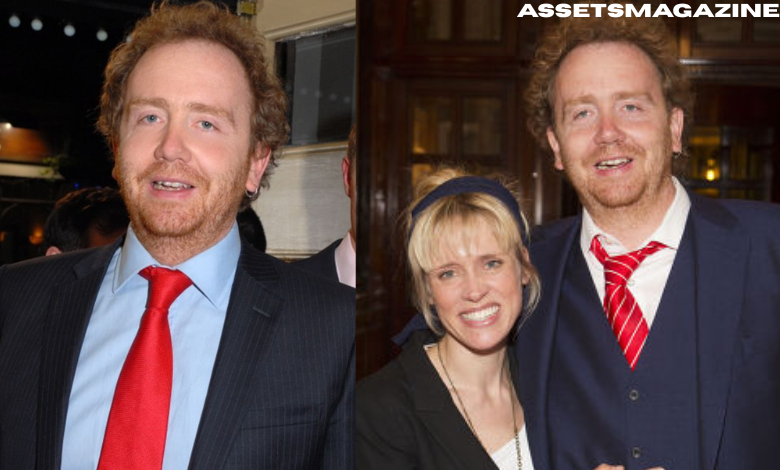
Mark Hines is a British architect whose work is closely associated with the conservation and adaptation of historic buildings for modern institutional use. He is not widely known outside architectural and heritage circles, but his projects have had a visible impact on how some major public buildings in the United Kingdom function today. His career is defined less by public recognition and more by long-term involvement in technically complex, heritage-sensitive developments. While many architects build public reputations through media visibility or signature design styles, Hines has taken a different path. His professional focus has been on working within existing structures—often listed or historically significant buildings—and adapting them for contemporary needs without losing their architectural value. This approach places him within a specific tradition of British architecture that prioritizes conservation, reuse, and careful intervention over large-scale replacement.
Early life and background
Information about Mark Hines’s early life is not widely documented in public records or verified sources. Unlike many individuals who later become linked with public institutions or prominent architecture firms, he has not developed a publicly constructed account of his early life or personal background. Details such as his early schooling, family background, and formative environment are not widely documented in reliable sources. What is documented is that he was born in the United Kingdom in June 1967. Beyond this, available records remain limited, reflecting a professional path that prioritizes architectural practice over personal publicity.
This lack of early biographical detail does not leave a gap in understanding his career so much as it reflects a broader pattern seen among architects working in conservation and public-sector projects. In these fields, professional contributions are often documented through buildings and planning records rather than personal storytelling.
Education and early professional direction
A significant early milestone in Hines’s career was his receipt of the Lethaby Scholarship from the Society for the Protection of Ancient Buildings (SPAB). This scholarship is awarded to individuals interested in the conservation and repair of historic structures, rather than their replacement or redesign. SPAB itself has a long-standing philosophy rooted in the ideas of William Morris, emphasizing maintenance, repair, and respect for original craftsmanship. Being selected for this scholarship placed Hines within a professional environment that prioritizes technical understanding of historic materials and building methods.
The experience also exposed him to conservation debates that extend beyond architecture into cultural heritage, urban planning, and public policy. This early grounding appears to have shaped his later career decisions, particularly his consistent involvement with heritage buildings undergoing major functional transformation.
Work with MacCormac Jamieson Prichard
Hines spent a significant part of his early and mid-career working with MacCormac Jamieson Prichard (MJP Architects), a well-regarded British architectural practice known for its work on institutional and educational buildings. The firm developed a reputation for combining modern architectural techniques with sensitivity to historical and urban contexts. At MJP, Hines worked within a professional culture that emphasized precision and restraint. Projects of this nature typically require close coordination between architects, engineers, conservation specialists, and planning authorities. Unlike purely commercial developments, heritage-related projects involve strict regulatory frameworks and long consultation processes.
This environment suited Hines’s developing interests in adaptive reuse and conservation architecture. Rather than focusing on entirely new construction, much of his work involved understanding how existing buildings could be modified to serve new functions while maintaining structural and historical integrity.
SPAB and conservation philosophy
Alongside his architectural career, Hines’s ongoing association with the Society for the Protection of Ancient Buildings continued to shape his professional outlook. SPAB promotes a conservation philosophy that avoids unnecessary restoration and instead emphasizes repair using traditional techniques and materials where possible. This approach contrasts with more intervention-heavy architectural methods that prioritize visual renewal or modernization. Instead, SPAB-aligned practice requires detailed knowledge of historic construction methods, material behavior, and long-term structural performance.
Hines’s alignment with these principles suggests a consistent architectural philosophy: buildings are not static objects to be redesigned at will, but evolving structures that require careful management over time. This perspective is particularly relevant in public infrastructure projects, where buildings must balance heritage value with functional demands.
Establishing his own practice
In 2006, Hines founded his own architectural practice, Mark Hines Architects, based in Clerkenwell, London. The location itself is significant, as Clerkenwell is widely recognized as a hub for architecture and design firms, housing a mix of independent practices and established studios. Running an independent practice allowed Hines to focus more directly on the types of projects that aligned with his expertise—particularly large institutional buildings undergoing redevelopment or adaptation. Rather than pursuing high-volume commercial work, the practice has been associated with selective, technically demanding commissions.
Independent architectural practices working in this space often operate in long project cycles. From initial feasibility studies to design development, planning approval, and construction, projects can take many years to complete. This requires not only architectural skill but also sustained coordination with public bodies, heritage organizations, and contractors.
BBC Broadcasting House redevelopment
One of the most widely documented projects associated with Mark Hines is the redevelopment of BBC Broadcasting House in London. This building, first established in the early twentieth century, is a Grade II listed site with strong cultural and architectural importance. The redevelopment project was complex in scale and ambition. It required combining modern broadcasting systems with an existing historic structure while carefully maintaining its original architectural features. The goal was not simply to refurbish the building, but to transform it into a fully functional modern media center capable of supporting digital-era broadcasting. This kind of project requires balancing competing priorities. On one hand, the building’s historic character must be preserved. On the other, the internal structure must be significantly upgraded to accommodate new technologies, workflows, and safety requirements.
The BBC Broadcasting House redevelopment is often cited as one of the major institutional architecture projects in Britain during its period of execution, with a reported value in the region of £1.4 billion. Large-scale projects of this nature typically involve multiple architectural teams, consultants, and contractors, and Hines’s involvement reflects his experience in managing complex heritage-sensitive developments.
Richmond House and public debate on heritage
Another project associated with Hines’s professional sphere is Richmond House in Whitehall, a building that has been the subject of ongoing debate regarding its future use and structural adaptation.
Richmond House forms part of a wider discussion on how government buildings are expected to develop and adapt over time. The central issue often revolves around whether historic or semi-historic public buildings should be preserved in their existing form or significantly altered to meet modern requirements.
Hines’s involvement in such discussions aligns with his broader professional focus: finding practical solutions for buildings that must serve contemporary functions while retaining architectural significance. These debates are not purely technical; they also involve political, cultural, and financial considerations.
Professional approach and architectural outlook
Across his career, Hines’s work reflects a consistent approach centered on adaptive reuse. This involves studying existing structures in detail and identifying ways they can be modified without erasing their architectural identity. This approach requires technical precision. Architects in this area need a strong grasp of design fundamentals along with knowledge of historic construction methods, material wear, structural behavior, and listed building regulations. It also requires collaboration. Conservation projects typically involve historians, engineers, planning authorities, and conservation officers. Decisions are rarely made unilaterally; instead, they emerge through negotiation between multiple stakeholders. Hines’s career demonstrates how architecture in this context is less about individual expression and more about problem-solving within constraints.
Public profile and personal life
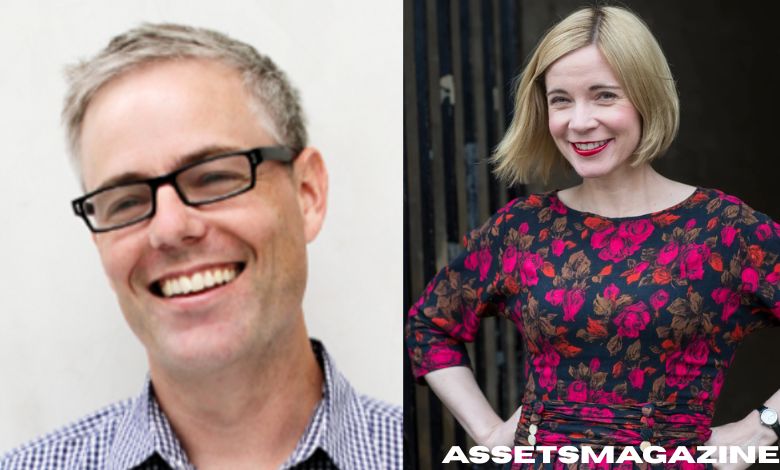
Despite his involvement in high-profile projects, Mark Hines maintains a relatively low public profile. He is not known for extensive media engagement or public commentary on architectural trends. He is married to historian and broadcaster Lucy Worsley, a public figure known for her work in history programming and writing. While this connection has brought occasional public attention, Hines himself remains largely outside media focus. His professional identity remains separate from public-facing cultural commentary, and there is little indication that he seeks visibility beyond his architectural work.
Broader significance of his work
The type of architecture associated with Hines plays a significant but often understated role in how cities function. While new landmark buildings often receive public attention, much of the built environment evolves through the adaptation of existing structures. Institutional buildings such as broadcasting centers, government offices, and educational facilities require continuous updating. Architects working in this space must ensure that buildings remain usable over decades or even centuries. Hines’s work fits within this long-term perspective. Rather than producing instantly recognizable architectural icons, his projects contribute to the continuity and functionality of existing urban infrastructure.
Conclusion
Mark Hines’s career illustrates a specific and important strand of British architecture focused on conservation and adaptive reuse. His work with SPAB, his experience at MJP Architects, and his leadership of his own practice all point to a consistent professional focus on preserving historic buildings while adapting them for modern use. Projects such as the redevelopment of BBC Broadcasting House highlight the scale and complexity of this work. These are not simple restoration efforts but large institutional transformations that require balancing heritage value with contemporary operational needs. Although he does not maintain a high public profile, his architectural contributions are embedded in some of the UK’s most significant public buildings. His career demonstrates how architecture can operate quietly but effectively within existing structures, shaping the way public institutions function without necessarily drawing widespread attention.