Doria Felice Palmieri was an American clinical psychologist whose life briefly intersected with public attention through her marriage to Ron Reagan, the son of U.S. President Ronald Reagan. Despite this connection, she remained largely private throughout her life and is not widely documented in mainstream public records beyond key biographical moments. Born on September 13, 1951, in Los Angeles, she came from a family with Italian roots and a background in the entertainment industry. Her father worked as a scenic designer in Hollywood, contributing to film set production at Twentieth Century-Fox. Her life reflects a combination of creative upbringing, academic focus, and a later professional path in psychology, with a consistent preference for privacy.
What is known about Doria Palmieri comes mostly from biographical accounts tied to her marriage and professional work rather than public interviews or media presence. She did not maintain a public-facing career in entertainment or politics, even when connected to one of America’s most well-known political families.
Early Life and Family Background
Doria Felice Palmieri was born and raised in Los Angeles, California, a city shaped by the entertainment industry during the mid-20th century. Her father, Faustino Bruno Renzo Palmieri—often known as Tito—was Italian-born and worked as a scenic designer for Twentieth Century-Fox. His work involved building sets for film productions, a role that placed the family near the creative and technical side of Hollywood rather than its public spotlight. Her mother, Margaret Liguori Palmieri, contributed to a household that maintained strong cultural ties to their Italian heritage. The Palmieri surname is historically linked to southern Italy, particularly regions such as Campania and Sicily. This background provided Doria with a cultural identity shaped by both American urban life and Italian family traditions.
Growing up in Los Angeles during the 1950s and 1960s, she was surrounded by a city undergoing rapid change. While Hollywood glamour defined the city’s global image, her family’s position within the industry remained behind the scenes. This distinction between visibility and privacy would later mirror her own personal choices.
Education and Academic Direction
Doria Palmieri attended California State University, where she studied philosophy. Her academic focus suggested an early interest in structured thinking, ethics, and human behavior. Philosophy as a discipline often encourages analytical reasoning and abstract thought, skills that later aligned with her professional path in psychology. During her academic years, she was not publicly associated with activism or media attention. Instead, her educational background points to a steady and conventional academic progression. After completing her studies, she eventually moved toward clinical psychology training, a field that requires long-term study, supervised practice, and a strong foundation in behavioral sciences.
Her transition from philosophy to psychology reflects a shift from theoretical study to applied human analysis. This move is consistent with individuals who prefer structured professional environments and direct work with people rather than public-facing roles.
Early Career and Work as a Literary Researcher
Before fully establishing herself in clinical psychology, Doria Palmieri worked as a literary researcher in New York. This role involved examining written material, organizing information, and synthesizing research findings for use in publishing or academic contexts. Literary research requires careful reading, attention to detail, and the ability to interpret context across different sources. These skills are also relevant in psychology, where observation, documentation, and analysis form part of daily practice.
At the time she held this position, she was living in a modest apartment in Greenwich Village. Her life during this period reflects a typical early-career phase in New York, where professional development and financial constraints often exist side by side. Her work as a researcher also placed her in an environment where intellectual discussion and cultural activity were central. This setting likely influenced both her personal and professional development before her transition into clinical practice.
Meeting Ron Reagan
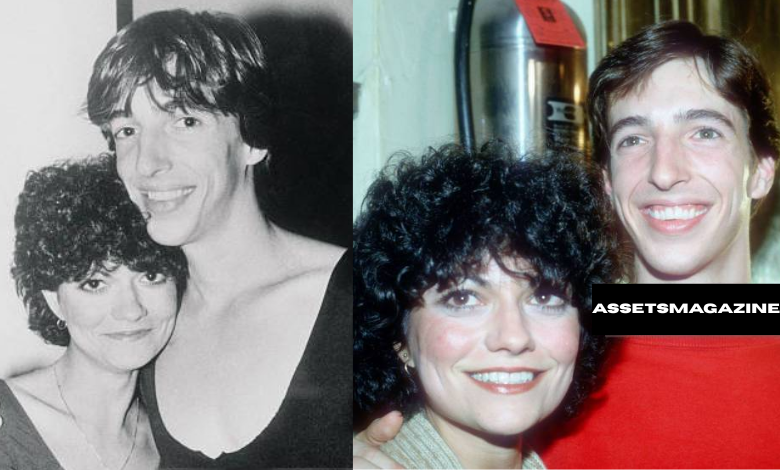
Doria Palmieri met Ron Reagan in the late 1970s under circumstances tied to dance training in Los Angeles. Ron Reagan, who had briefly attended Yale University before leaving, was pursuing ballet at the time and training at Stanley Holden’s dance studio. Their meeting occurred during a period when both were exploring different directions in life. Ron Reagan was focused on dance and performance, while Doria was building her academic and professional path. Despite differences in background and age, their shared environment in artistic and training spaces brought them into contact.
By 1980, their relationship had developed to the point where they were living together in New York. At that time, Ron Reagan was in his early twenties, and Doria Palmieri was in her late twenties, working in literary research. Their relationship developed away from public attention until it became widely noticed due to Ron Reagan’s family connection to then-president-elect Ronald Reagan.
Marriage in 1980
On November 24, 1980, shortly after Ronald Reagan won the U.S. presidential election, Doria Palmieri and Ron Reagan obtained a marriage license in Manhattan. They initially went to a judge’s chambers with the intention of completing paperwork, but the situation changed when the judge recognized the significance of the names involved. According to accounts, the judge offered to perform the ceremony immediately, and the couple agreed. The marriage took place in a simple setting rather than a formal or public ceremony. At the time of her marriage, Doria Palmieri was 29 years old and still working in New York. The event drew attention not because of ceremony scale, but because it connected a private individual to the incoming first family of the United States. The marriage was unexpected within political circles. Ron Reagan was known for having a different lifestyle and career interests compared to his parents, and the relationship reflected his independence from political expectations.
Public Attention and Private Life
Following the marriage, Doria Palmieri became briefly associated with public attention due to her connection to the Reagan family. However, she did not pursue any public role or media presence. There are no records of her giving interviews or participating in political or social commentary. This lack of public engagement remained consistent throughout her life. She did not use her position to enter public life, and she did not become a public figure in her own right.
The relationship between public interest and personal privacy is a recurring theme in cases involving families of political figures. In Doria Palmieri’s case, she maintained a clear separation between her personal life and public curiosity. Even during periods when media attention focused on the Reagan family, she remained outside of public narratives. Her professional identity as a psychologist continued independently of her family association.
Career in Clinical Psychology
Doria Palmieri eventually established herself in clinical psychology, a profession centered on mental health assessment, therapy, and patient care. Clinical psychology involves working with individuals to understand behavioral patterns, emotional challenges, and psychological conditions. While specific details of her practice are not widely documented, her training and work would have required advanced study and supervised clinical experience. Psychologists in this field typically work in hospitals, private practice, or institutional settings.
Her background in philosophy and research likely contributed to her ability to engage in structured analysis and patient evaluation. The transition from literary research to psychology is consistent with skill sets involving observation, interpretation, and communication. Unlike public-facing professions, clinical psychology often requires confidentiality. This professional standard aligns with her broader pattern of maintaining privacy in both personal and professional life.
Marriage Duration and Personal Stability
Doria Palmieri and Ron Reagan remained married for 33 years. Their relationship lasted through significant changes in both their personal and family circumstances. During this time, Ron Reagan continued to develop his career in broadcasting and writing, while Doria maintained her professional focus in psychology. Their marriage existed largely outside of public discussion, with limited media coverage focused on personal details.
Long-term marriages involving individuals connected to public families often face external attention. In this case, however, both individuals maintained relatively private lives, which limited public commentary about their relationship. Their long marriage suggests a level of personal stability, even if details of their private life were not publicly shared.
Later Life and Residence in Seattle
In later years, Doria Palmieri lived in Seattle. Information about her later life remains limited, consistent with her long-standing preference for privacy. She passed away in Seattle after a life spanning 33 years of marriage and a professional career in psychology. Her death marks the end of a life that, while briefly connected to a prominent political family, remained largely outside public documentation. Seattle, known for its quieter pace compared to Los Angeles and New York, aligns with her long-standing pattern of living outside media attention.
Legacy and Public Memory
Doria Palmieri’s legacy is not defined by public achievements or media presence, but rather by a life that remained largely private despite occasional public interest. She represents a category of individuals who are indirectly connected to public figures but choose not to participate in public life. Her professional work in clinical psychology reflects a career focused on individual care rather than public recognition. Her academic and professional path shows continuity in analytical and human-centered work. The limited public information about her life also highlights the contrast between public curiosity and private reality. While her name appears in connection with a well-known political family, her personal identity remains defined more by her profession and choices than by her marriage.
Conclusion
Doria Palmieri lived a life that moved between different environments—Hollywood-influenced Los Angeles, academic spaces in California, research work in New York, and professional practice in psychology. Her marriage to Ron Reagan brought temporary public attention, but she did not pursue visibility or public engagement. Instead, she built a career in clinical psychology and maintained a consistent preference for privacy. Her life reflects a separation between personal identity and public association, even when linked to one of the most recognized political families in the United States. Her story remains primarily documented through key biographical points rather than public narrative, making her an example of a life lived largely outside the public record despite its occasional intersections with history.