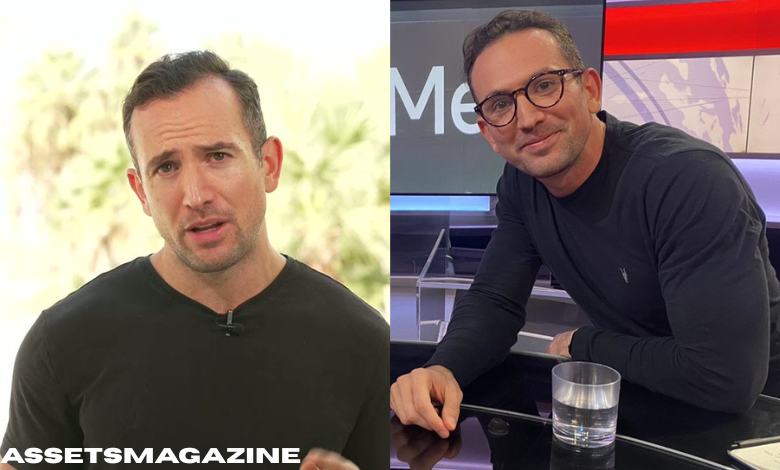
Hugo Bachega is a journalist widely known for his field reporting with BBC News. He appears regularly in international news coverage, often delivering updates from regions affected by war, political tension, and humanitarian crises. For many viewers, his face became familiar during major global events where the BBC deployed correspondents to provide on-the-ground reporting. He is often described as a Brazilian-born journalist working for the British Broadcasting Corporation. His reporting has been associated with locations such as Ukraine, Lebanon, Israel and Palestine, and Brazil. Because of this international presence, audiences frequently ask about his background, particularly his nationality and how he came to work in British media. Understanding his professional identity requires looking at both his early career and his role within modern broadcast journalism.
Early Life and Background
Publicly available information indicates that Hugo Bachega was born in Brazil. He grew up in a Portuguese-speaking environment, which later became one of his key professional advantages as an international reporter. Brazil’s media landscape has produced many journalists who later work abroad, and Bachega followed a similar path. His early exposure to journalism began in Brazil, where he reportedly worked in local media before moving into international reporting. While detailed personal records such as childhood history are not widely publicized, his professional trajectory shows a clear transition from national to global journalism. What stands out in his background is not personal publicity but the lack of it. Unlike many media figures, he does not maintain a public persona outside reporting. His visibility comes almost entirely from his work on television and digital news platforms.
Entry into Journalism
Hugo Bachega started his journalism career in Brazil before expanding into international news organizations. Early in his career, he worked in environments that required reporting on domestic issues, political developments, and social conditions. Like many journalists who eventually join global networks, his progression appears to have been based on field reporting experience rather than celebrity exposure. His ability to report clearly in English and Portuguese gave him a strong foundation for international assignments. Working in bilingual environments is often a key factor for journalists entering global media organizations. In Bachega’s case, this skill set later became relevant when covering events involving both English-speaking audiences and Portuguese-speaking regions.
Career at BBC News
The major phase of Hugo Bachega career is his work with BBC News, one of the world’s most widely recognized public broadcasters. At the BBC, he serves as a correspondent assigned to international news coverage. BBC correspondents are typically deployed to regions where major political or humanitarian developments are unfolding. Bachega has been assigned to several such locations over the years, reflecting the trust placed in him as a field reporter. His reporting style is focused on live updates, direct observations, and interviews with people affected by events. Instead of studio-based commentary, his role involves being physically present in regions where conditions can be unpredictable.
Reporting from Conflict Zones
One of the defining aspects of Hugo Bachega work is his presence in conflict and crisis zones. He has been seen reporting from Kyiv during the war in Ukraine, from Beirut during political and economic instability in Lebanon, and from Jerusalem during ongoing tensions in the Israel-Palestine region. Field reporting in such areas involves logistical challenges, safety risks, and rapidly changing conditions. Journalists must often work under pressure, sometimes in environments where communication infrastructure is unstable. Bachega’s reporting is typically structured around real-time updates. This includes describing events as they unfold, speaking to witnesses, and relaying official statements from local authorities or international organizations. His presence in these regions is not occasional but part of a consistent pattern in his BBC assignments, suggesting specialization in international conflict reporting.
Journalism Style and Approach
The reporting style of Hugo Bachega is generally described as calm and factual. He does not typically use dramatic language, instead focusing on clear communication of events. This approach is important in conflict journalism, where accuracy and neutrality are essential. Reports from war zones require balancing human stories with verified information, often under time constraints.
His delivery often follows a structure:
- What is happening on the ground
- Where it is happening
- Who is affected
- What official sources are saying
This structure allows audiences to understand complex situations without speculation or emotional framing.
Languages and Communication
Hugo Bachega is known to speak both English and Portuguese. This bilingual ability is frequently noted in interviews and broadcasts. Portuguese connects him to his Brazilian background, while English is essential for his work at the BBC. In international journalism, language flexibility is a major asset, especially when reporting from multilingual regions or interviewing diverse populations. Being able to communicate in multiple languages allows correspondents like Bachega to interact directly with sources rather than relying on interpreters in every situation.
Nationality and Public Identity
A common question asked about Hugo Bachega is related to his nationality. Public records and professional descriptions consistently identify him as Brazilian-born. At the same time, because he works for the BBC and is based in the United Kingdom for professional purposes, some media references describe him as a Brazilian journalist working for British media. This distinction is important in journalism, where nationality and employment are often separate concepts. His professional identity is tied to the BBC, while his origin is Brazilian. There is no public indication that he has changed nationality or publicly redefined his citizenship status. Instead, he is generally described based on both origin and professional affiliation.
Work in Major Global Events
Throughout his career, Hugo Bachega has reported during several major international events. These include armed conflicts, political crises, and humanitarian emergencies. In Ukraine, he has provided updates on military developments and civilian conditions during the ongoing conflict. In the Middle East, his reporting has focused on regional tensions, displacement, and political negotiations. Such assignments require coordination with local fixers, security teams, and BBC editorial staff. Journalists in these roles often operate in rapidly changing environments where news developments can shift within minutes.
Challenges of Field Reporting
Working as a correspondent like Hugo Bachega involves several challenges. These include physical risk, limited access to verified information, and communication difficulties in unstable regions. Conflict reporting also requires emotional discipline. Journalists are regularly exposed to human suffering, destruction, and uncertainty while maintaining professional neutrality on air. Another challenge is time pressure. Live reporting requires delivering accurate information quickly, often without the ability to fully verify every detail on the ground before broadcasting. Despite these challenges, field correspondents remain essential for international news organizations because they provide first-hand information that cannot be captured remotely.
Role in Modern Journalism
In the broader context of global media, Hugo Bachega represents a category of journalists who specialize in international field reporting. This role has become increasingly important as global conflicts and crises receive continuous international attention. Viewers rely on correspondents to interpret complex events in real time. His reporting contributes to the BBC’s mission of providing verified global news coverage, especially from regions where independent reporting is difficult.
Public Perception
Audiences who regularly watch BBC News often recognize Hugo Bachega as a familiar face during major breaking news events. Public perception of him is generally shaped by his calm reporting style and consistent presence in conflict coverage. Because he appears in serious news contexts, he is often associated with reliability and factual reporting. Unlike entertainment figures, his recognition comes from credibility rather than personal publicity. Most public interest in him is related to his work rather than his personal life.
Conclusion
Hugo Bachega is a Brazilian-born journalist working with BBC News who has built a career around international field reporting. His work has taken him to some of the most complex and sensitive regions in the world, where he provides real-time updates on political and humanitarian developments. His professional identity is defined by field reporting rather than public visibility. He represents a modern generation of journalists whose role is to deliver direct, on-the-ground information from conflict zones to global audiences. Through his work, viewers gain access to events as they unfold, helping shape public understanding of international crises.